
Virtue and a Sledgehammer demo gameplay Combat Guide
Virtue and a Sledgehammer demo gameplay is a narrative-driven demolition experience where players wield a ten-kilogram sledgehammer to smash robotic villagers, break down walls, and uncover traumatic family memories across a secluded Spanish town.
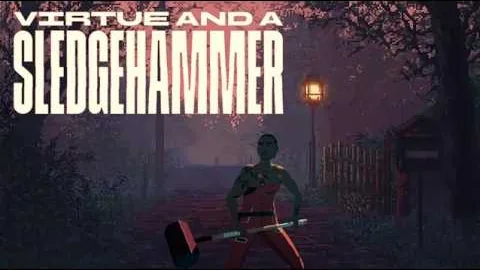
Virtue and a Sledgehammer demo gameplay is a narrative-driven demolition experience where players wield a ten-kilogram sledgehammer to smash robotic villagers, break down walls, and uncover traumatic family memories across a secluded Spanish town.
How Do Core Combat and Demolition Controls Work?
Sledgehammer combat is the primary interaction method for clearing obstacles and neutralizing hostile mechanical villagers. Movement relies on standard WASD inputs on keyboard or the left analog stick on controller, with zero dedicated sprint button available. Swinging the sledgehammer uses the left mouse button or the right trigger (RT) on gamepads. Tapping the attack button triggers a quick shove or light hit, while holding the button channels Patel's accumulated rage to deliver a heavy smash capable of demolishing solid masonry and knocking automatons backward.
Combat encounters lack standard health meters or numerical stat readouts. Damage taken from attacking automatons causes the perimeter of the screen to flash red, forcing players to manage space manually using a practical combat guide approach. Hostile robots attack with melee swings or try to pin Patel in place, requiring timed heavy strikes to clear crowds.
| Attack Method | Best Tactical Situation | Mechanical Trade-Off |
|---|---|---|
| Quick Tap (Shove) | Swarming melee automatons | Delays enemy advances without dealing lethal damage |
| Standard Swing | Solitary wandering targets | Clears targets within direct range without wide radius impacts |
| Full Heavy Smash | Masonry walls, barricades, and grouped hostiles | Demands sustained button hold and leaves Patel stationary during windup |
What Structures and Objectives Appear in the Village?
Destructible architecture is the core environmental obstacle separating Patel from key narrative triggers throughout the demo map. Players break through house walls, interior doors, and crumbling barriers using charged hammer strikes, as described in our demolition guide. Certain exterior elements, including steel wire fences and solid natural boulders, resist damage and define the playable boundary.
Exploration centers on locating glowing red canisters and memory scenes spread throughout the deserted settlement. Striking these canisters produces visual flashes that reveal past interactions between Patel, her sister Nina, and their mother Merche. Along the streets, players encounter various non-hostile android ghosts continuing mundane human routines, from tending orchards to arguing over regional soccer matches.
Go back to your hometown and tear it down with a sledgehammer in this narrative exploration game. — the Steam store page
How Do Dialogue Choices Shape Memory Vignettes?
Interactive memory vignettes are narrative pauses triggered by interacting with red canisters and surreal local figures. When Patel examines specific objects, such as a giant snail on a path or an abandoned vehicle, the game transitions into branch-driven interactive fiction sequences. The player selects dialogue options that reflect Patel's emotional state, debating the nature of souls, family obligations, and personal identity.
These conversations contextualize the unresolved family trauma driving the physical destruction of the town. Key characters appearing in these flashbacks include Sister Rogelia at the local church hospice, who explains how digitized elder minds regressed to childlike innocence, and the local bartender at Bar Fermin. Dialogue choices let players express grief, resentment, or violent intent before returning to real-time demolition.
What Are the System Requirements for the PC Demo?
PC system hardware targets are the official performance specifications established on the Steam store page. The development teams at Deconstructeam and Selkie Harbour built the game using 3D environments populated with stylized polygonal assets and physics-driven destruction routines. Further background updates and project overviews are hosted directly on the official website.
| Hardware Component | Minimum Requirement (1080p, 60 FPS Low) | Recommended Requirement (1080p, 60 FPS High) |
|---|---|---|
| Operating System | Windows 10 x64 Bit | Windows 11 x64 Bit |
| Processor | Intel Core i5-6600K / AMD Ryzen 5 3550H | Intel Core i7-6950 / AMD Ryzen 7 2700X |
| Memory | 8 GB RAM | 16 GB RAM |
| Graphics Card | GeForce GTX 960 / Radeon RX 570 / Arc A380 | GeForce GTX 1080 / Radeon RX 5700 |
| DirectX Version | Version 11 | Version 12 |
| Storage Space | 3 GB available space | 3 GB available space |
Next step
Demo Overview
Explore the playable opening chapter, destruction mechanics, system specs, and narrative branches featured in the official PC demo.
Related Guides
Virtue and a Sledgehammer Prologue: Story and Where to Play; Virtue and a Sledgehammer Demo: Story, Mechanics, and Scope