
Virtue and a Sledgehammer story: Plot and Lore Breakdown
The Virtue and a Sledgehammer story follows Patel as she returns to her Spanish hometown with a sledgehammer to confront her sister Nina, who digitized their dying mother and the local community into mechanical shells.
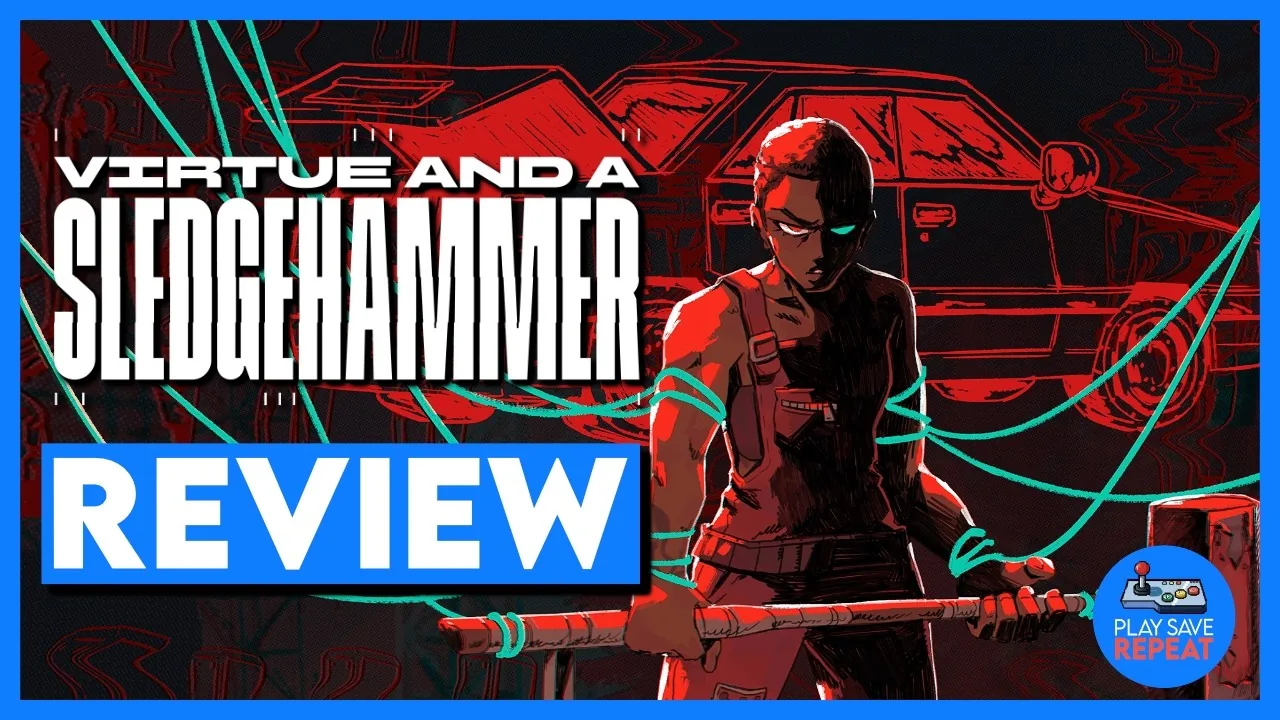
The Virtue and a Sledgehammer story follows Patel as she returns to her Spanish hometown with a sledgehammer to confront her sister Nina, who digitized their dying mother and the local community into mechanical shells.
What Is the Core Conflict in Virtue and a Sledgehammer?
The core conflict is a philosophical and familial rupture between two sisters over grief, bodily decay, and artificial preservation. Developed by Deconstructeam and Selkie Harbour, the story unfolds across a secluded mountain settlement in Spain, where protagonist Patel arrives after crashing her car against a roadside tree. Her mother, Merche, succumbed to an agonizing degenerative illness that deteriorated her faculties and motor functions. In response to Merche's physical decline, Patel's sister, Nina, used her background in engineering and cognitive science to map brain impulses and transfer human consciousness into robotic bodies. Patel views this process as the erasure of human life, branding the machines as hollow simulations rather than genuine continuations of her loved ones.
Armed with an iron tool she describes as twenty pounds of physical media, Patel marches into town to dismantle the mechanical collective. The emotional weight of this mission ties directly to family trauma, as Merche's deceased biological body remains hidden inside the car trunk while her synthetic duplicate resides higher up the mountain. As confirmed on the Steam store page, the narrative frames this destructive pilgrimage around painful memories of childhood and community decay:
"Flesh is a source of aches and tainted humors. It's only now, devoid of bones, devoid of hunger, that I can tell you... I have never been happier." — the developer's Steam store page
Patel rejects the idea that a copied data model equals human existence. While Nina argues that existence means extending one's will without the shackles of organic disease, Patel maintains that change, unpredictability, and mortal decay define what a person is.
How Does Nina's Digitization Project Alter the Town?
The digitization project is an experimental process engineered by Nina to translate human neural impulses into synthetic android bodies. To populate the town of Vertude, Nina established mind backups stored on dedicated server banks near the local cemetery, placing the hardware over ancestral graves. Villagers afflicted by senility, cancer, or physical disability agreed to undergo the procedure, believing it offered relief from chronic pain and aging.
Instead of creating a peaceful utopia, the transformation locks the community in an artificial stasis. The residents wander rural streets as android ghosts, repeating former grudges and mundane arguments. Rather than purifying human behavior, the synthetic brains preserve individual flaws:
- Elderly citizens housed by Sister Rogelia in the church suffer cognitive regression, behaving like confused children trapped in metal shells.
- Bar regulars at the Ferment continue arguing over soccer rivalries between Barcelona and Real Zaragoza while spewing xenophobic and homophobic remarks.
- A former shopkeeper remains fixated on playing Rummikub and gifting candy, unaware that the physical shop closed years earlier.
- Neighbors continue complaining about tax filings, municipal politics, and lawn disputes despite having no biological needs.
Nina also applied her methodology to herself. Believing that mapping the brain alone created static replicas that lacked erratic emotion, Nina initiated a personal Ship of Theseus experiment. She systematically removed her biological organs, including her reproductive system, bladder, and stomach, observing how physical disconnection altered her temperament before facing Patel atop Vertude's mountain.
Which Narrative Choices Shape Patel's Investigation?
Dialogue branches in the opening sequence and subsequent memory sequences establish how Patel frames her grief and moral accountability. Interacting with blue and red memory shards embedded in broken architecture provides playable scenes of interactive fiction. Blue shards depict formative conversations between Patel, Nina, and Merche regarding childhood ambitions, while red shards reveal the psychological strain of caring for their dying mother.
Players determine Patel's philosophical posture through structured conversational prompts:
| Opening Moral Position | Family Conflict Context | Narrative Reflection |
|---|---|---|
| Argue and reason indefinitely | Confronting a relative planning an atrocious act | Reflects continuous debate, highlighting Patel's guilt over failing to persuade Nina earlier |
| Resort to physical force | Stopping a relative from harming innocent people | Justifies Patel's demolition approach and aggressive dialogue toward robotic sentinels |
| Sever ties and alert authorities | Responding to an unforgivable domestic crime | Emphasizes complete emotional detachment, portraying Patel as an outsider abandoning her roots |
These decisions do not alter the physical weight of Patel's strikes, which players can study in the demolition guide, but they contextualize the emotional tone of later encounters. Each conversational stance mirrors the central moral argument: whether severe domestic suffering justifies extreme intervention.
Why Does Patel Dismantle the Cemetery Server Banks?
The cemetery server banks are central storage nodes that preserve the digital consciousness archives of the entire settlement. When Patel enters the cemetery, she discovers that android bodies are disposable husks; destroying a metal shell in the streets does not erase the resident, as Nina can reprint a duplicate as long as the corresponding server remains intact. Smashing the servers destroys the underlying mind copies, permanently silencing the voices stored inside.
Demolishing these units causes projection flashes of past memories: family dogs, holiday dinners, and adolescent conversations. This systematic purging leads directly toward the climactic Nina choice, where Patel must decide whether to embrace Nina's technological vision of endless synthetic existence or destroy the machinery and allow the community to finally pass into natural oblivion. Further details regarding the setting and technical specifications appear on the official website.
Next step
Branching Endings
Compare both narrative conclusions in Virtud and see how Pratelle's final decisions affect the town and her family relationships.
Related Guides
Virtue and a Sledgehammer Combat Guide: Attack Controls; Virtue and a Sledgehammer walkthrough: Full Route Guide