
Virtue and a Sledgehammer Family Trauma Explained
Virtue and a Sledgehammer family trauma is the central narrative foundation of Pratelle's destructive return to her rural Spanish hometown. Her unresolved grief stems from her mother Merche's fatal illness and her sister Nina's mechanical digitization experiments.
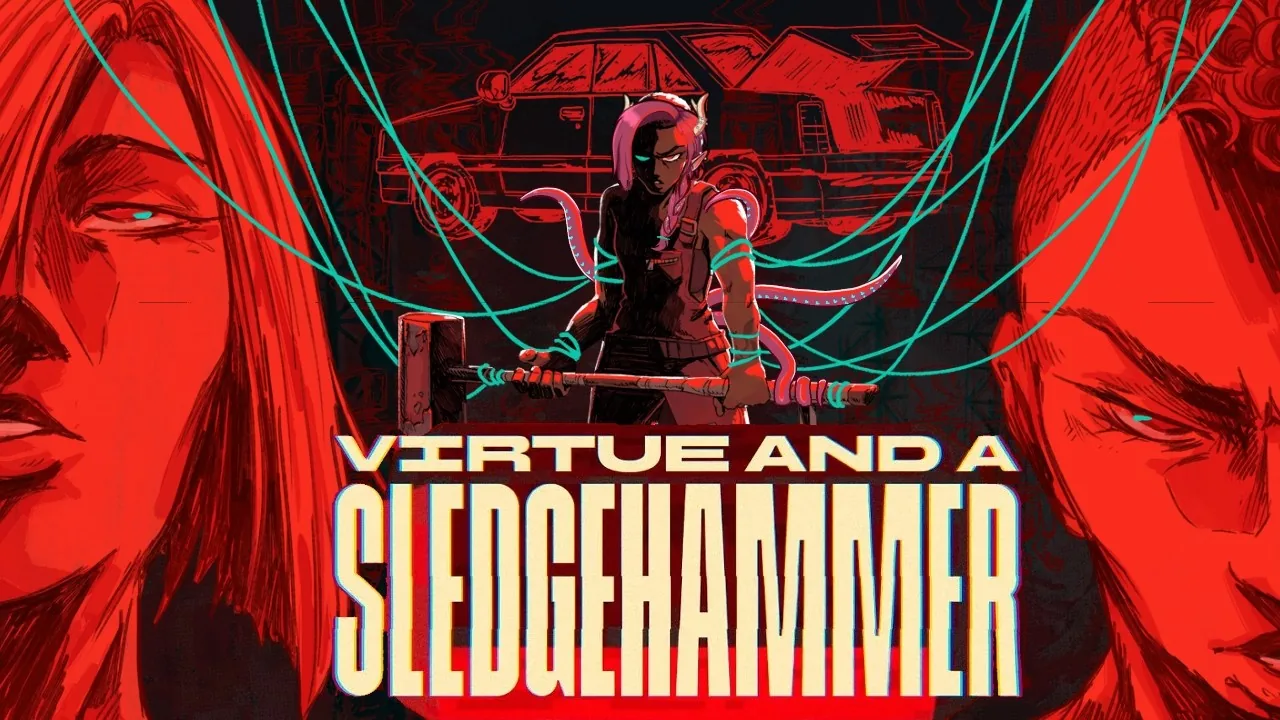
Virtue and a Sledgehammer family trauma is the central narrative foundation of Pratelle's destructive return to her rural Spanish hometown. Her unresolved grief stems from her mother Merche's fatal illness and her sister Nina's mechanical digitization experiments.
How Does Family Trauma Drive Pratelle's Mission?
Unresolved resentment is the catalyst that propels Pratelle back into her hometown with a twenty-pound sledgehammer. As detailed on the official Steam store page, the narrative follows Pratelle as she explores the remains of a village repopulated by mechanical facsimiles. Rather than attending a conventional burial, Pratelle carries her mother's physical body in the trunk of her car while marching toward the mountain where Nina built her laboratory.
The sledgehammer itself carries deep domestic significance. In a childhood conversation, Merche explains that their ancestral house was built by a grandfather who treated his children merely as labor. After her own mother died, Merche seized that exact sledgehammer to knock down interior walls and create a shared bedroom for Nina and Pratelle. Pratelle repurposes this family tool into an instrument of destruction, turning structural demolition into an aggressive confrontation with her upbringing.
During her path toward the mountain, Pratelle encounters digitized townspeople who speak through mechanical shells. Some hostile residents retain past prejudices, while others flee or beg for preservation. Pratelle views these android ghosts as hollow simulations rather than genuine people. By leveling walls and pulverizing servers, Pratelle uses physical force to reject Nina's artificial substitute for real familial grief.
What Ruptured the Bond Between Pratelle, Nina, and Merche?
Caregiver burnout is the primary wedge that fractured the family before the digitization began. When Nina left the village to pursue university studies, Pratelle remained behind to care for Merche as her health rapidly deteriorated. Medical evaluations ruled out Alzheimer's disease, Huntington's disease, and corticobasal degeneration, leaving both sisters helpless as their mother suffered confusing behavioral episodes.
The emotional burden intensified as Merche slipped between moments of deep affection and severe disorientation. During some episodes, Merche sleepwalked into the woods, mistook salt for sugar while cooking, or spoke disturbing statements about abandoning her children. Pratelle sacrificed freelance coding and modding work to provide daily care, while Nina focused on developing technological solutions.
Nina's answer was the total digitization of the human mind. Driven by the refusal to accept Merche's physical demise, Nina scanned their mother's neural patterns and transferred them into an artificial chassis. This procedure soon expanded across the entire municipality. While Nina viewed this process as an evolutionary leap that freed humanity from bodily suffering, Pratelle saw it as an erasure of human truth. In an interview with Screen Rant's developer preview, director Jordi de Paco highlighted the core emotional dynamic holding these opposing views together:
"One of the mantras we had while developing the narrative is: despite everything, I still love you." — Jordi de Paco in an interview with Screen Rant
How Do Flashback Memories Frame the Sisters' Moral Conflict?
Memory fragments are interactive vignettes triggered by striking environmental glitches across the town. Smashing these glowing nodes unlocks cinematic sequences of interactive fiction that reveal key moments from the sisters' adolescence. Through these scenes, players witness the philosophical divide that began long before the town's mechanical conversion.
In an early memory beside a giant snail, Pratelle and Nina debate what constitutes a soul. Nina argues that biological consciousness is merely an intricate arrangement of electrical impulses and chemical reactions. Pratelle maintains that a soul is defined by passion, emotional depth, and affection. This contrast resurfaces in adulthood: Nina believes an algorithmically preserved mind remains fully human, whereas Pratelle argues that genuine life requires change, entropy, and mortality.
These flashbacks also demonstrate how maternal discipline left lingering scars on both daughters. Merche frequently compared the two girls, praising Nina's academic discipline while criticizing Pratelle's unconventional style and fiery temperament. When Pratelle asks Merche to accept her identity without judgment, Merche agrees to stop criticizing her clothing, yet immediately returns to questioning her life trajectory. These interactions illustrate a cycle where genuine familial love remains entangled with criticism and control.
Decision Analysis for Facing Family Memories
Dialogue encounters during flashback sequences allow players to shape Pratelle's internal processing of past domestic grievances. The table below outlines how specific conversational paths contextualize the family's history.
| Dialogue Focus | Emotional Context | Narrative Trade-Off |
|---|---|---|
| Focus on Merche's Appearance | Pratelle confronts Merche regarding persistent criticism over wearing red overalls and non-traditional clothing. | Merche accepts Pratelle's visual self-expression, yet leaves deeper parental anxieties unaddressed. |
| Focus on Sister Comparisons | Pratelle challenges Merche for consistently praising Nina's career while treating Pratelle as undisciplined. | Acknowledges the unequal burdens placed on each daughter during Merche's illness. |
| Confronting Nina Directly | Pratelle rejects Nina's claims that digital minds achieve rapture and immortality on the mountain. | Reaffirms that decay and physical mortality are inseparable from authentic human love. |
Navigating through these scenes reinforces Pratelle's resolve as she nears the mountain summit. Using methodical demolition techniques to clear paths through barricaded homes and church yards, Pratelle systematically strips away the computerized legacy Nina constructed.
The story does not present easy moral absolution. Instead, Pratelle's march leads toward a climactic choice regarding Nina, where the sisters must finally settle whether artificial preservation honors their mother's memory or permanently desecrates it. In confronting these mechanical echoes, the narrative demonstrates that facing domestic pain requires accepting mortality rather than hiding behind artificial permanence.
Next step
Interactive Fiction
Examine how dialogue prompts, memory sequences, and the companion prologue work alongside hammer demolition in Pratelle's hometown journey.
Related Guides
Virtue and a Sledgehammer story: Plot and Lore Breakdown; Virtue and a Sledgehammer Combat Guide: Attack Controls
Story and Lore
Examine the plot, character arcs, and thematic moral choices in Virtue and a Sledgehammer as Patel confronts her family and digitized neighbors.
Combat Guide
Understand attack inputs, charge mechanics, enemy behaviors, and tactical positioning to survive hostile machine encounters in your hometown.